NDIS Staff Management Software Australia: How to Manage Your Support Workforce More Efficiently
Discover how NDIS staff management software helps Australian providers streamline staff records, rostering, leave, attendance, compliance and workforce coordination. Learn how a connected system can reduce manual admin, improve visibility and support more efficient care operations.
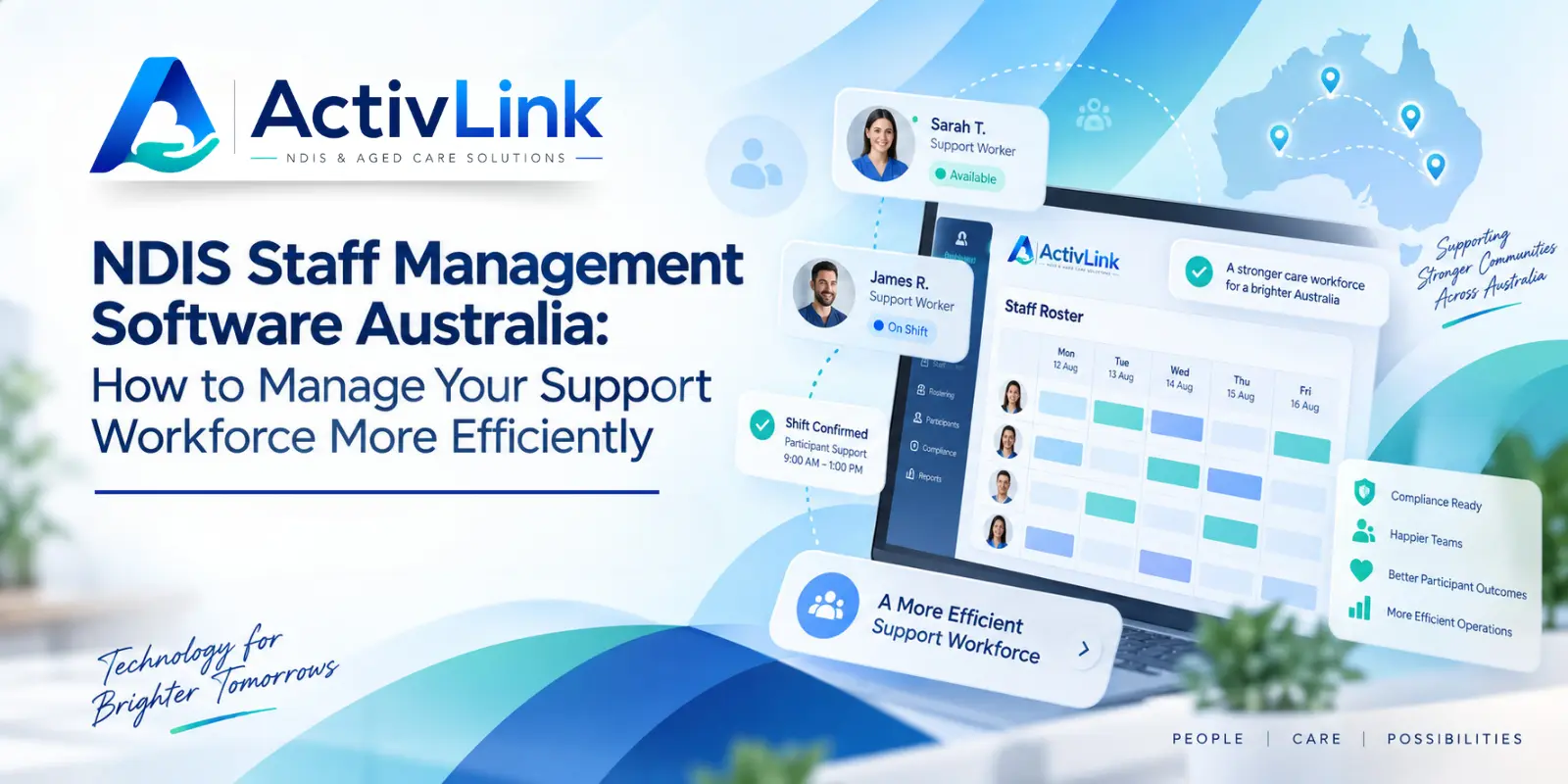
Running an NDIS organisation means coordinating people, shifts, participant needs, records and day-to-day service delivery at the same time. As teams grow, spreadsheets, emails and separate systems can make workforce administration harder to control. NDIS staff management software can give Australian providers a clearer way to organise worker information, availability, leave, rostering, attendance and related records in one connected environment. When used as part of broader NDIS and aged care software, it can also help teams reduce duplicated administration and improve visibility across care operations.
What Is NDIS Staff Management Software?
NDIS staff management software is a digital system designed to help disability service providers organise and manage their workforce more efficiently. Depending on the platform, it may bring together staff profiles, roles, qualifications, availability, leave, shifts, attendance, documents, permissions and reporting.
Unlike a simple staff spreadsheet, a connected workforce platform can link information across daily operational tasks. For example, worker availability can inform rostering, approved attendance can support timesheet or billing workflows, and staff records can be accessed by authorised team members without searching through multiple folders.
For Australian NDIS providers, the goal is not simply to digitise existing paperwork. It is to create clearer workflows so coordinators, managers and support workers can work from consistent information.
Why Is NDIS Workforce Management Becoming More Complex?
As an NDIS provider grows, workforce management usually becomes more demanding. A coordinator may need to consider worker availability, participant requirements, qualifications, recurring services, leave, last-minute changes and travel while keeping services running smoothly.
Manual systems can work when an organisation is very small. However, once more workers, participants and shifts are added, information can become fragmented. Staff updates may sit in emails, availability may be recorded in a spreadsheet, documents may be stored elsewhere, and attendance may need to be reconciled separately.
This is where NDIS staff management software can provide value. A central workforce system can reduce the need to repeatedly enter or check the same information and can give authorised users a more reliable view of current staff operations.
How Can NDIS Staff Management Software Improve Workforce Efficiency?
The biggest benefit comes from connecting related workforce tasks rather than treating them as separate administrative jobs.
Keep Staff Information in One Place
Centralised staff profiles can make it easier to maintain contact details, roles, qualifications, availability, documents and other workforce information. This helps reduce the time spent searching across spreadsheets, shared drives and inboxes.
The NDIS Practice Standards include human resource management requirements relating to worker competence, qualifications, experience, pre-employment checks, induction and training records. A well-structured system can support providers in keeping relevant records organised, although the provider remains responsible for meeting its regulatory obligations.
Manage Staff Availability and Leave
Staff availability changes frequently in care organisations. Workers may have recurring availability, planned leave or unexpected absences. If these details are managed separately from rostering, coordinators can spend unnecessary time checking whether someone can actually work a shift.
NDIS staff management software can help connect availability and leave with scheduling decisions, making it easier to identify suitable workers and reduce avoidable roster conflicts.
Simplify Rostering and Shift Allocation
Rostering is one of the most important operational connections within workforce management. Coordinators need visibility of who is available, which workers are suitable for particular services and where gaps exist.
Rather than rebuilding schedules manually, connected software can support recurring shifts, shift reassignment and conflict detection. The aim is not to remove human decision-making, but to give coordinators better information when allocating workers.
Track Attendance More Clearly
Knowing who was scheduled is only one part of workforce management. Providers also need a practical way to understand whether workers attended and whether recorded hours require review.
When NDIS staff management software connects rostering with clock-in, clock-out or approved time records, administrative teams can more easily compare planned and completed service activity. This can also reduce repeated data entry across timesheets and downstream billing processes.
Give Support Workers Mobile Access
Support workers are often delivering services away from the office. A mobile-friendly system can allow them to review upcoming shifts, access relevant client information, record attendance and complete notes without returning to a desktop system.
For providers operating across metropolitan, regional or multiple service areas in Australia, mobile access can improve the flow of operational information between field workers and office teams.
How Does Staff Software Support Worker Records and Compliance?
Workforce records are an important part of NDIS provider operations. The NDIS Quality and Safeguards Commission requires providers to maintain relevant workforce information in applicable circumstances, including records relating to worker checks, qualifications, experience and training.
NDIS staff management software can help providers keep relevant worker documents and information easier to locate and review. Features such as document storage, expiry information, permissions and audit histories may support more consistent administration.
However, software should be treated as an operational tool rather than a guarantee of compliance. Providers still need appropriate policies, training, supervision, recordkeeping practices and management oversight.
NDIS Staff Management Software vs Spreadsheets
Spreadsheets are flexible and familiar, but they become harder to manage when several team members need current information at the same time. Multiple versions can appear, changes may be difficult to trace, and related information can become spread across different files.
NDIS staff management software creates a more structured environment in which workforce information can connect with rosters, attendance, records and permissions. For a growing provider, this can improve visibility and reduce reliance on manual reconciliation.
The right time to move away from spreadsheets depends on the organisation. Warning signs may include increasing roster conflicts, duplicated data entry, difficulty finding staff documents, inconsistent attendance records or too much coordinator time being spent on administration.
What Features Should Australian NDIS Providers Look For?
When comparing NDIS staff management software, providers should focus on features that solve real operational problems rather than choosing a system simply because it has a long feature list.
Useful capabilities may include staff profiles, qualification records, availability and leave management, recurring rostering, conflict detection, attendance, mobile worker access, role-based permissions, document storage, audit histories and reporting.
Providers should also consider how easily the platform connects staff information with client, scheduling and billing workflows. A system that keeps these areas disconnected may still leave teams performing significant manual work.
Can Better Staff Management Reduce Administrative Work?
Yes, when the system is configured around the organisation's actual workflows. The greatest efficiency gains usually come from reducing repeated tasks.
For example, a coordinator should not need to check one file for availability, another for qualifications and a third for shift information before assigning a worker. Similarly, attendance data should not need to be manually recreated several times before administration can use it.
NDIS staff management software can help create a clearer information flow between workforce planning, service delivery and administrative follow-up. This can free coordinators and managers to spend more time resolving exceptions and supporting service quality rather than updating disconnected systems.
How Can Activlink Help Manage an NDIS Support Workforce?
Activlink is Australian care workforce management software built for NDIS, disability support and aged care providers. It brings together staff records, availability, rostering, attendance, role permissions, documents, reporting and related care operations within one platform.
Activlink supports recurring and one-off shifts, staff availability, mobile worker access, clock-in and clock-out workflows, progress notes, document storage and audit trails. Connected workflows can also help reduce repeated data entry between workforce management, service delivery and billing administration.
For organisations evaluating NDIS staff management software, this connected approach can reduce the need to manage each part of workforce administration in isolation. Instead, teams can work with shared staff, shift and operational information across the provider organisation.
Managing a growing NDIS workforce should not require your team to spend hours reconciling spreadsheets, messages and disconnected records. Activlink can help bring staff, rosters, attendance, records and operational workflows into one clearer platform.
If you are looking for NDIS staff management software designed around Australian care-provider operations, contact us to discuss your workforce needs, explore available features or book a product demonstration. Activlink's NDIS and aged care software is built to help providers manage people, shifts and care operations with greater visibility and less manual administration.