
NDIS CRM Software Australia: Is It Worth It for NDIS Providers?
Explore whether NDIS CRM software Australia is worth the investment for NDIS providers. Learn how it can simplify rostering, participant records, billing, compliance and workforce management while reducing administration and supporting business growth.
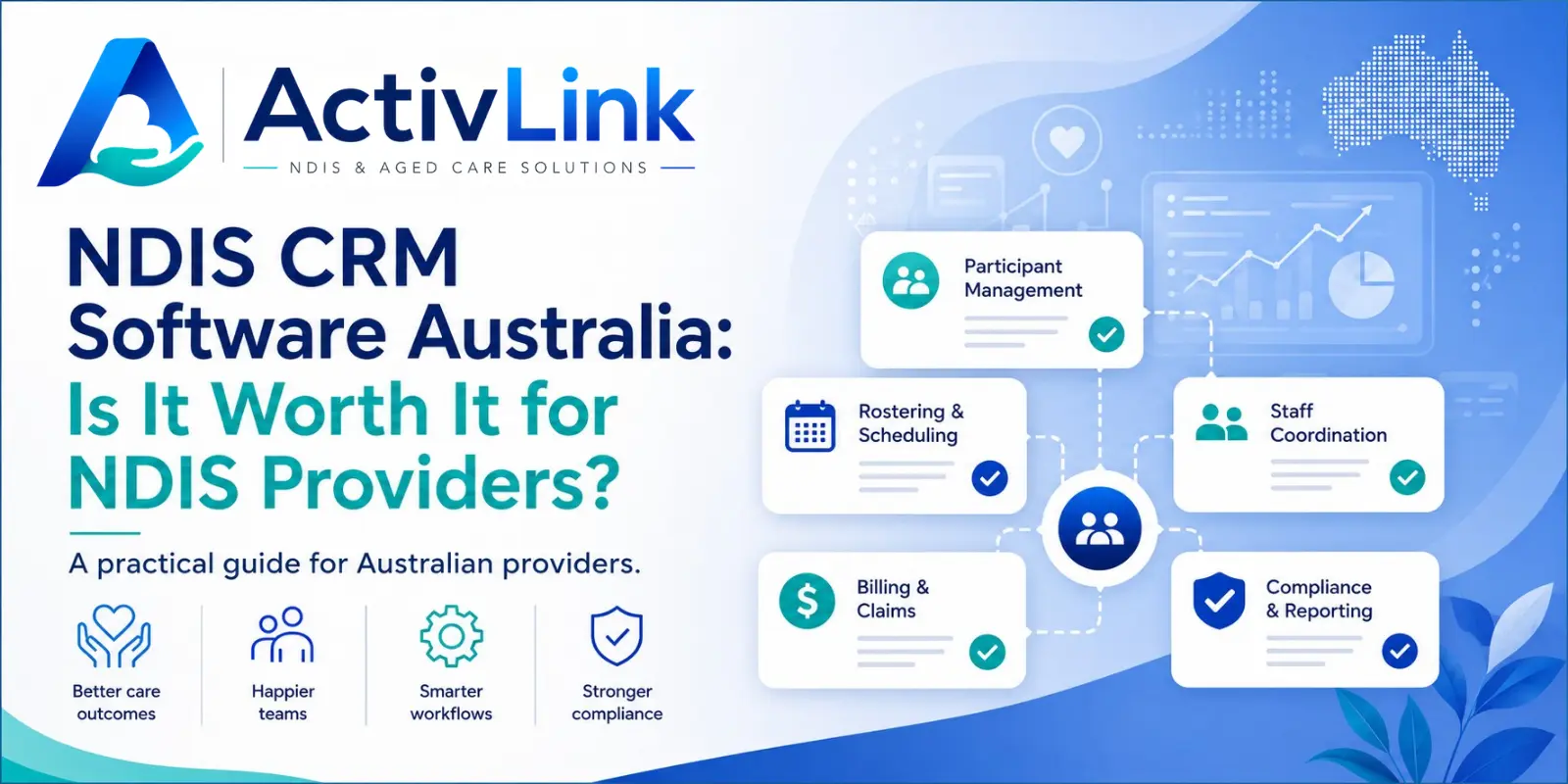
Running an NDIS provider business involves far more than delivering quality supports. Teams must coordinate participants, workers, rosters, service agreements, progress notes, incidents, billing and compliance records. As organisations grow, spreadsheets and disconnected apps can become difficult to control. This is why many providers are exploring NDIS CRM software Australia solutions and broader NDIS and aged care software to bring their daily operations into one reliable system.
So, is the investment worthwhile? For providers dealing with repeated administration, missed information or growing workforce complexity, the answer is often yes. However, the value depends on choosing software that reflects Australian care delivery rather than a generic sales CRM.
What Is NDIS CRM Software Australia?
NDIS CRM software Australia is a specialised digital platform for managing participant relationships and the operational work surrounding support delivery. Unlike a traditional CRM that mainly stores leads and sales activity, an NDIS-focused system can connect participant records with rosters, staff availability, attendance, service notes, documents, incidents, invoicing and reporting.
The most useful platforms create one source of truth. Coordinators can see current participant information, workers can access the details needed for a shift, and authorised managers can review activity without searching through emails, paper files or separate spreadsheets.
Why Are NDIS Providers Moving Away From Spreadsheets?
Spreadsheets may work when a provider has a small number of participants and workers. Nevertheless, they become harder to maintain as shifts, funding arrangements and compliance responsibilities increase. Multiple versions can circulate, changes may not be traceable, and information can be stored in places that are difficult for the right person to access.
NDIS CRM software Australia can reduce these problems by placing connected workflows in one controlled environment. Rather than updating a roster in one file, recording attendance elsewhere and preparing invoices from another source, the provider can manage related information through a consistent process.
Signs Your Provider May Have Outgrown Manual Systems
Common warning signs include roster changes being missed, staff repeatedly asking for participant details, duplicate data entry, slow invoice preparation, incomplete progress notes and difficulty gathering evidence before an audit.
When managers spend more time checking systems than improving services, a purpose-built platform may deliver measurable value.
Can NDIS CRM Software Reduce Administration?
One of the strongest reasons to adopt NDIS CRM software Australia is the potential to reduce repetitive administrative work. Recurring shifts, staff notifications, attendance records, standardised notes and bulk invoicing can remove steps that would otherwise be completed manually.
The benefit is not simply automation. Better software creates a connected flow from scheduling to service delivery and then to billing or reporting. This reduces the need to re-enter the same information and helps teams identify missing records sooner.
For example, Activlink combines scheduling, attendance, a mobile staff app, audit trails and NDIS billing features within an Australian workforce platform. Staff and client information can also be imported using CSV files, helping providers move away from existing spreadsheets more efficiently.
How Does NDIS CRM Software Australia Improve Rostering and Workforce Management?
Rostering is often one of the most time-consuming parts of running a care workforce. Coordinators must consider worker availability, recurring services, qualifications, shift overlaps, cancellations and last-minute replacements.
NDIS CRM software Australia can make scheduling more manageable through recurring rosters, templates, conflict detection and automated notifications. Mobile access can also help workers review shifts, clock in and out, enter progress notes and upload expenses while away from the office.
Activlink offers recurring shifts, roster conflict detection, qualification-gap identification, GPS-enabled attendance and offline-capable worker access. These functions are especially useful for regional teams or workers delivering support in areas with unreliable mobile coverage.
Does NDIS CRM Software Australia Support Compliance and Audit Readiness?
Software cannot guarantee compliance on its own. Policies, training, supervision and sound management remain essential. Even so, NDIS CRM software Australia can make it easier to maintain organised, current and accessible records.
The NDIS Practice Standards cover areas such as governance, risk management, quality management, information management, incidents, human resources and continuity of supports. Incidents connected with NDIS support delivery also need to be identified, assessed, recorded, managed and resolved.
A suitable platform should therefore support document storage, incident records, role-based permissions and an audit trail showing who changed important information and when. These capabilities can reduce the pressure of reconstructing evidence shortly before an audit.
Can NDIS CRM Software Australia Improve Billing Accuracy?
Billing errors can delay cash flow, create participant concerns and increase administrative rework. NDIS CRM software Australia can support accuracy by linking delivered services with the relevant participant, support item, time record and agreed rate.
Australian providers must follow the applicable NDIS Pricing Arrangements and Price Limits. They also need to ensure service agreements, support items, rates and delivered services remain accurate and current.
Price-aware invoicing and bulk invoice generation can therefore be valuable, provided the organisation still reviews claims and maintains accurate service agreements. Activlink includes NDIS price-guide-aware invoicing and bulk invoice generation in eligible plans.
Is NDIS CRM Software Australia Worth It for Small Providers?
Small providers sometimes assume that specialist software is only suitable for large organisations. In practice, smaller teams may gain significant value because one owner or coordinator often handles rostering, participant communication, compliance and billing at the same time.
NDIS CRM software Australia may be worthwhile when the hours saved each month exceed the subscription cost or when the system lowers the risk of missed shifts, incomplete records and delayed invoices.
The calculation should include staff time, administrative rework, compliance preparation and the cost of managing several separate tools.
Activlink’s Starter plan is designed for smaller providers with up to 10 staff and 50 active clients. It includes core scheduling, attendance, the staff app, audit trails, compliance logs, CSV imports and Australian data residency. Activlink also offers a 14-day free trial and no lock-in contract.
What NDIS CRM Software Australia Features Should Providers Compare?
Before selecting NDIS CRM software Australia, providers should compare the practical workflows they use every day rather than choosing a platform based only on the longest feature list.
Essential CRM and Participant Management Features
Look for central participant profiles, service agreement information, secure documents, support notes, contact records and permission controls.
Staff should see the information required for their role without receiving unnecessary access to sensitive data.
The system should also make it easy to update records and locate current information. Otherwise, teams may continue relying on emails, paper notes and external spreadsheets even after purchasing the software.
Workforce, Rostering and Mobile Features
Check for recurring shifts, conflict detection, staff availability, attendance verification, offline access, progress notes and reassignment notifications.
The system should be simple enough for frontline workers to use consistently during busy shifts.
Mobile usability is particularly important. A platform may appear comprehensive during an office-based demonstration but still create problems when support workers need to access shift information or enter notes while working in the community.
Billing, Reporting and Compliance Features
Compare NDIS pricing support, invoice generation, incident management, audit logs, document storage and exportable reports.
Also confirm which integrations are currently live, which are limited to certain plans and which are still planned.
Providers should not assume that every advertised integration is included automatically. Ask whether additional setup, subscription or implementation charges apply.
Questions to Ask Before Choosing NDIS CRM Software Australia
A software demonstration should focus on real provider scenarios. Ask how the platform handles a cancelled shift, missed clock-out, replacement worker, updated service agreement, incident report and billing correction.
Also ask where Australian data is hosted, how user permissions are controlled, what onboarding support is available and whether pricing increases with every user, participant or shift.
Important questions include:
- Can existing staff and participant data be imported?
- Can workers access information from a mobile device?
- Does the system work in areas with poor internet coverage?
- Can coordinators identify roster conflicts?
- Are important changes recorded in an audit trail?
- Can reports be filtered by participant, worker or date?
- Does the platform support current NDIS pricing information?
- What happens when the provider grows beyond its current plan?
- Can data be exported if the service is cancelled?
- Is Australian onboarding or customer support available?
Finally, test the software with the people who will actually use it. Coordinators, administrators and support workers may identify practical issues that are not obvious to senior management during a sales demonstration.
How Can Providers Measure the Return on Investment?
The value of NDIS CRM software Australia should be measured against more than its monthly subscription fee.
Providers should examine the time spent creating rosters, contacting workers, correcting timesheets, finding documents, preparing invoices and gathering audit evidence.
For example, saving several administrative hours each week may produce a meaningful return even before reduced errors are considered. Faster invoicing may also support more consistent cash flow, while clearer records can help managers identify missing information before it becomes a larger problem.
However, providers should establish a baseline before implementation. Record how long key tasks currently take, how often corrections are needed and which activities cause the greatest frustration.
These figures can then be compared after the software has been introduced.
What Are the Possible Limitations?
Although NDIS CRM software Australia can improve coordination, buying software does not automatically solve unclear processes.
Poorly defined roles, inconsistent note-taking and limited staff training can continue inside a new system.
Implementation also requires attention. Existing records need to be checked before migration, permissions should be configured carefully, and workers need practical guidance on how to use the platform.
Providers should therefore choose software that suits their current team while allowing room for growth. A complicated enterprise platform may overwhelm a small organisation, while a basic scheduling application may not support a growing provider’s billing, reporting or compliance needs.
Final Verdict: When Is NDIS CRM Software Worth the Investment?
NDIS CRM software Australia is usually worth considering when manual systems are creating duplicated work, poor visibility or operational risk.
The greatest return comes from selecting a platform that connects participant management with workforce delivery instead of adding another isolated tool.
For a small provider, the value may come from reducing the number of hours an owner spends managing rosters and invoices. For a growing organisation, the value may involve stronger oversight, standardised workflows and better access to operational information across multiple teams.
However, software should support good processes rather than replace them. Providers still need clear policies, trained workers, accurate records and accountable management.
A well-matched platform makes those responsibilities easier to carry out consistently as the organisation grows.
Activlink is an Australian care workforce management platform built to help NDIS providers manage rostering, staff, attendance, participant information, billing and compliance through one connected system. Start a 14-day free trial or book a demonstration to see whether NDIS CRM software Australia is right for your organisation. Choose technology that supports today’s NDIS operations while preparing your organisation for broader care delivery. Contact us to explore practical NDIS and aged care software designed for Australian providers.
Related articles
NDIS Software Solutions: What Should You Ask During a Product Demo?
Choosing NDIS software solutions? Discover the key questions Australian providers should ask during a product demo, covering rostering, attendance, billing, staff access, pricing and support. Use this practical guide to compare platforms and find software that suits your team’s daily operations.
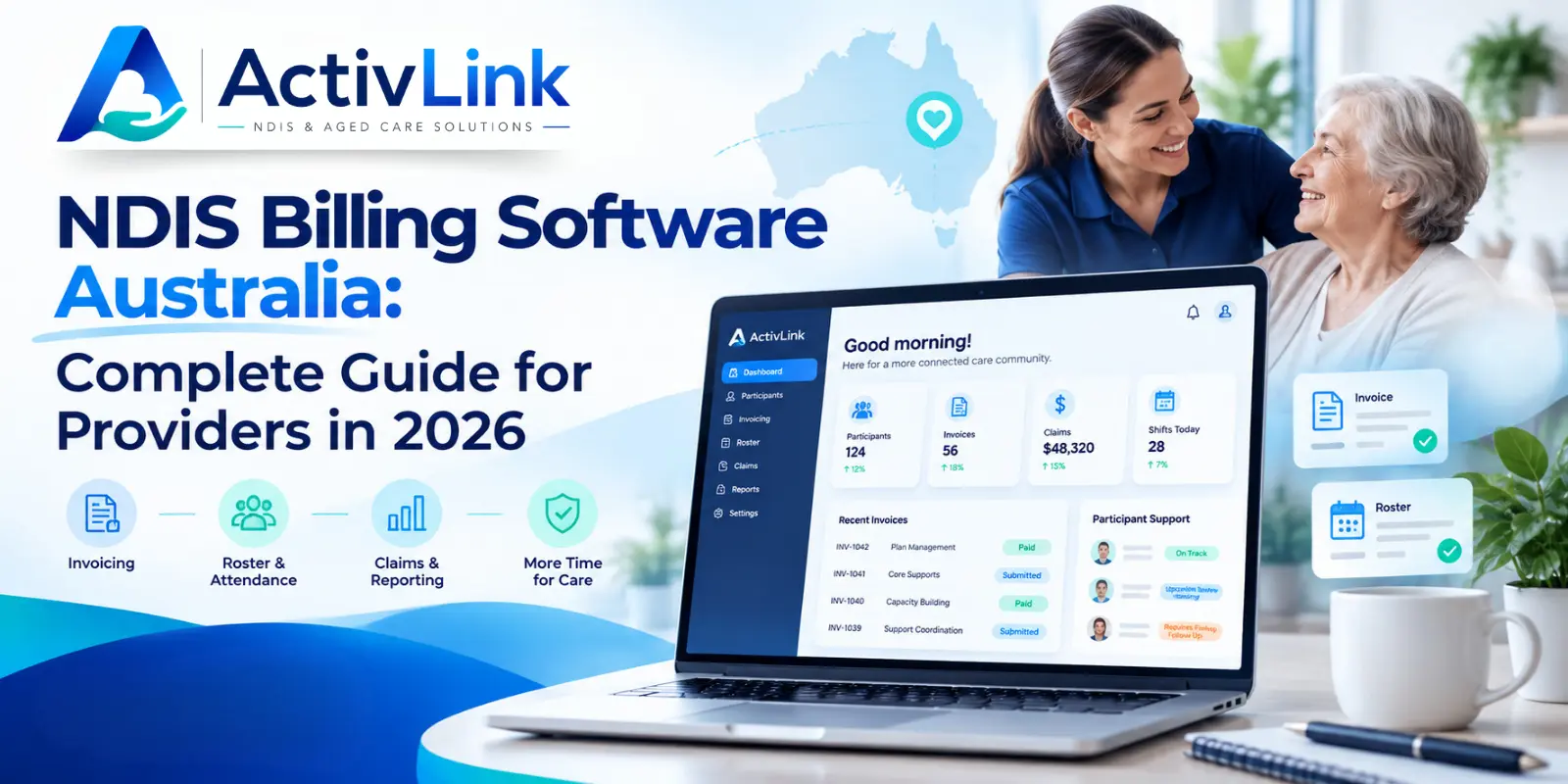
NDIS Billing Software Australia: Complete Guide for Providers in 2026
Discover how NDIS billing software Australia can help providers streamline invoicing, manage bulk claims, reduce billing errors and connect rostering, attendance and service records. This 2026 guide explains key features, billing workflows, pricing considerations and what Australian NDIS providers should look for when choosing the right software.
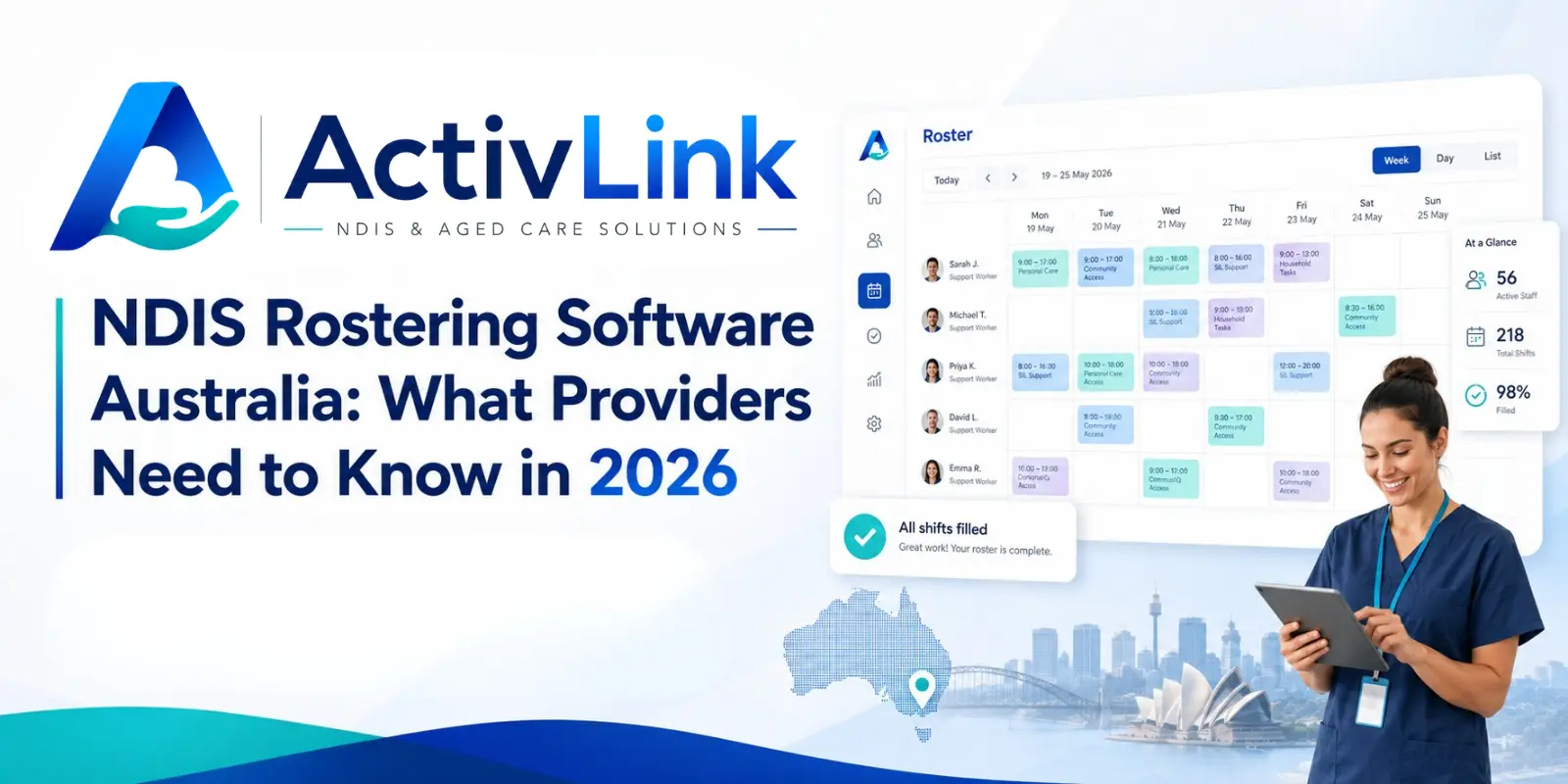
NDIS Rostering Software Australia: What Providers Need to Know in 2026
Discover how NDIS rostering software helps Australian providers manage staff schedules, recurring shifts, attendance, availability and workforce operations more efficiently. This 2026 guide explains key features, benefits, compliance considerations and what to look for when choosing the right rostering platform.