Australian-Built Care Software vs Overseas Platforms: Which Is Better?
Compare Australian-built care software with overseas platforms and discover which option better supports NDIS and aged care providers. This guide explores local compliance, data hosting, customer support, workforce management, pricing and implementation to help Australian care organisations choose software that suits their operational needs and long-term growth.
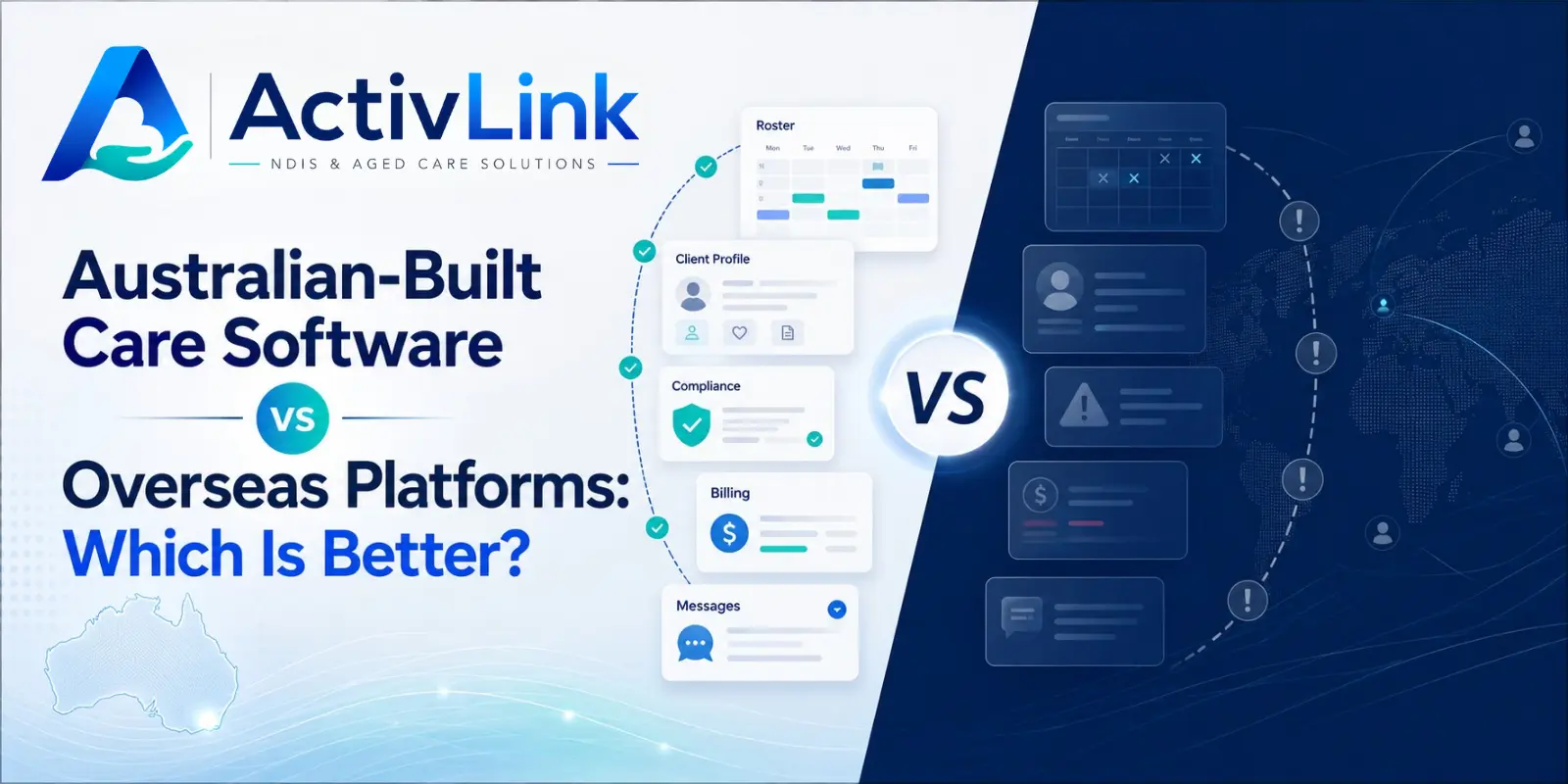
Choosing the right workforce platform can affect how efficiently an NDIS or aged care provider manages clients, staff, rosters, attendance, billing and compliance. For many organisations, the decision comes down to Australian-built care software or an overseas platform adapted for the local market. Working with an Australian care software company may offer stronger local relevance, but the best choice should still be based on practical features, security, support and long-term value.
What Is Australian-Built Care Software?
Australian-built care software is created with Australian care providers, terminology and operating conditions in mind. Rather than starting as a generic global product, it is usually designed around the day-to-day needs of local NDIS, disability support, home care and aged care organisations.
This local focus can influence how the platform handles staff scheduling, client information, service delivery records, attendance, billing and reporting. Australian-built care software may also be easier to understand because its language and workflows are more familiar to Australian managers, coordinators, administrators and support workers.
What Are Overseas Care Management Platforms?
Overseas platforms are developed outside Australia and often serve several countries, industries or care systems. Many are capable products with established features, large development teams and broad integration options. However, some require additional configuration before they suit Australian provider workflows.
An overseas system is not automatically unsuitable. Nevertheless, providers should check whether the software genuinely supports Australian requirements or simply uses local marketing language. A platform may offer useful scheduling and CRM tools while still lacking the workforce, billing or compliance detail needed by an Australian care business.
Australian Care Software vs Overseas Platforms: Key Differences
Local Sector Knowledge and Terminology
One of the clearest advantages of Australian-built care software is familiarity with the local care environment. Terms such as participants, support workers, service agreements, client contributions, shift notes and care teams may be reflected more naturally throughout the system.
By contrast, an overseas platform may use terminology designed for another funding model or health system. Although labels can sometimes be changed, the underlying workflow may still feel less suitable. Therefore, providers should evaluate more than the words displayed on the screen.
Workforce Management and Rostering
Care providers need more than a basic calendar. They may need to manage staff availability, leave, qualifications, shift changes, attendance, travel, unfilled shifts and accurate timesheets. Australian-built care software can be particularly valuable when these functions are connected in one workforce management process.
Overseas products may also provide strong rostering tools. However, the key question is whether the roster supports the way Australian care teams actually work. Providers should test how easily coordinators can find suitable staff, prevent scheduling conflicts and communicate last-minute changes.
NDIS and Aged Care Relevance
For a combined NDIS and aged care organisation, software should support different client groups without creating separate information silos. Australian-built care software can help by bringing workforce coordination, client records, service delivery and administration into a consistent operating environment.
Still, buyers should avoid assuming that every locally developed platform supports every programme. Ask vendors which capabilities are currently available, which are being developed and which require external systems. Clear answers are a stronger trust signal than broad claims.
Does Australian Data Hosting Matter?
Data location is an important procurement question because care platforms may hold sensitive information about clients, workers, services and incidents. Australian hosting can make data residency easier to understand and may align with an organisation’s internal risk or procurement preferences.
However, Australian-built care software is not automatically secure simply because it is developed locally. Providers should also ask about user permissions, audit logs, encryption, backups, system monitoring, breach response and data export. Security depends on the full design and management of the platform.
Local Customer Support vs Overseas Support
When rostering, attendance, or billing systems fail, delays can affect both staff and service delivery. Local support may offer more convenient business hours, clearer communication and a better understanding of Australian care operations.
An overseas vendor may still provide excellent round-the-clock assistance. Therefore, compare actual service arrangements rather than location alone. Ask who handles onboarding, how support requests are prioritised, whether phone assistance is available and what happens during a critical operational issue.
Is Australian-Built Care Software Better for Compliance?
Australian-built care software may be better positioned to reflect local documentation, workforce and reporting expectations. Features such as controlled access, worker records, incident documentation, service notes and audit trails can help providers organise evidence and reduce fragmented administration.
Nevertheless, software does not create compliance by itself. Policies, staff training, supervision and accurate recordkeeping remain essential. The platform should support a provider’s compliance processes rather than encourage the belief that technology replaces accountable management.
How Do Pricing and Implementation Compare?
Overseas products can appear affordable at first, particularly when they offer a low entry price. Yet providers should assess the total cost, including setup, additional modules, integrations, currency changes, data migration, training and support.
Similarly, Australian-built care software should be assessed on value rather than nationality. A locally developed platform is worthwhile when it reduces manual work, improves visibility and supports growth without introducing unnecessary complexity.
Before making a decision, request a written explanation of inclusions, user limits, client limits, onboarding fees, contract terms and cancellation conditions. Transparent pricing helps buyers compare platforms on equal terms.
Questions to Ask Before Choosing a Care Software Platform
A structured software evaluation helps providers avoid decisions based only on polished demonstrations. Ask the following questions before selecting Australian-built care software or an overseas alternative:
- Can the platform manage client records, staff, rosters, attendance and billing together?
- Does it support both NDIS and aged care workflows relevant to our organisation?
- Can staff use the system easily from mobile devices?
- How are access permissions and audit records managed?
- Where is our data stored, and how can we export it?
- What onboarding, migration and training support is included?
- How does pricing change as our organisation grows?
- Can we test real workflows before signing a long-term agreement?
These questions are suitable for both local and international vendors. The aim is to identify the platform that best fits the provider’s operational needs, not simply the company with the largest feature list.
Which Option Is Better for Australian Care Providers?
For many NDIS and aged care organisations, Australian-built care software offers a compelling advantage because it can be designed around local teams, language and operational realities. Local support and Australian-focused development may also make implementation and ongoing communication easier.
Even so, the right answer depends on the provider. A well-designed overseas system may be suitable when it supports the required workflows, security controls, integrations and service standards. Likewise, a local platform should only be chosen after its capabilities have been tested carefully.
The best approach is to compare systems using real scenarios. Create a roster, record attendance, update a client file, review staff availability, prepare billing information and examine the audit trail. The right Australian-built care software should perform these tasks clearly and consistently. A practical test will reveal far more than a general sales presentation.
Why Is Activlink Built for Australian Care Operations?
Activlink is a workforce management platform designed for Australian NDIS and aged care providers. It brings key operational functions together, including client records, staff management, rostering, leave, attendance, billing, communication and compliance-related administration.
Instead of relying on disconnected spreadsheets and manual processes, teams can use Australian-built care software to improve visibility across everyday operations. This can help coordinators manage shifts more clearly, administrators reduce repeated data entry, and business owners understand what is happening across their care workforce.
Activlink is designed to support organisations that want practical software without losing sight of the people delivering and receiving care. Its purpose is not simply to digitise existing paperwork, but to help care teams work in a more connected, organised and accountable way. Considering Australian-built care software for your NDIS, disability support or aged care organisation? Contact us to explore how one connected platform can simplify workforce management, rostering, attendance, billing and daily administration.